Want to sell VPNs, web hosting, AI tools, and more—without building anything yourself? Thousands of entrepreneurs are quietly running profitable reseller businesses, and most of their customers have no idea they’re buying white-labeled services.
This guide shows you exactly how it works.
→ Skip Ahead: Create Your Free Reseller Account
What Is a White-Label Reseller Business?
White-label reselling means you sell products and services under your own brand, even though another company provides the infrastructure.
Think of it like this: grocery stores sell “store brand” cereal. They don’t own farms or factories—they partner with manufacturers who produce products that get packaged with the store’s label.
Digital reselling works the same way. You get:
- Products ready to sell (VPN apps, hosting accounts, CRM software, etc.)
- Your branding on everything customers see
- Wholesale pricing so you profit on every sale
- Automated billing and provisioning
Your customers think they’re buying from you. Because they are.
What Can You Actually Resell?
Here’s where it gets interesting. Modern reseller platforms offer entire catalogs of digital services:
Cybersecurity & Privacy
- VPN subscriptions (apps for iOS, Android, Windows, Mac, Linux)
- E-SIM data plans with global coverage
Website & Hosting
- Web hosting accounts
- Website builder tools
- WordPress plugin packs
- Custom web design services
Business Software
- CRM systems
- Appointment booking platforms
- AI-powered invoicing
- AI business tools suites
Marketing Services
- Social media automation
- SMM services (followers, likes, engagement)
- Monthly SEO packages
You pick what fits your audience. A freelance web designer might resell hosting and WordPress tools. An IT consultant might focus on VPN, CRM, and business software. A marketing agency might offer the full stack.
→ See the Full Product Catalog
How Much Can You Make?
Let’s do real math.
Wholesale prices on a typical reseller platform:
| Service | Wholesale Cost |
|---|---|
| VPN Service | $6/month |
| AI Tools Suite | $5/month |
| Web Hosting | $15/month |
| Website Builder | $10/month |
| CRM System | $15/month |
| Appointment Booking | $20/month |
Most resellers apply a 100% markup (double the wholesale price). Some go higher for premium positioning.
Scenario: 25 clients on a basic service mix
- 10 clients on VPN @ $12/month = $120/month ($60 profit)
- 8 clients on Web Hosting @ $30/month = $240/month ($120 profit)
- 7 clients on CRM @ $30/month = $210/month ($105 profit)
Total monthly revenue: $570 Total monthly profit: $285 Annual profit: $3,420
That’s with just 25 clients and modest pricing. Top resellers on established platforms manage 100+ active services and clear $1,000+/month in pure profit.
The best part? This is recurring revenue. Clients pay monthly, quarterly, or annually—automatically.
Step 1: Choose Your Niche (Or Don’t)
You have two paths:
Niche Approach – Focus on one product category for a specific audience
Examples:
- “VPN service for remote workers”
- “Business tools for real estate agents”
- “Website hosting for photographers”
Pros: Easier marketing, clear positioning, higher conversion rates
General Approach – Offer a full catalog of digital services
Examples:
- “Complete digital services for small businesses”
- “Your one-stop tech partner”
Pros: More upsell opportunities, higher lifetime value per client
Both work. The niche approach is easier to market initially. The general approach scales bigger.
→ Get Started With Either Approach
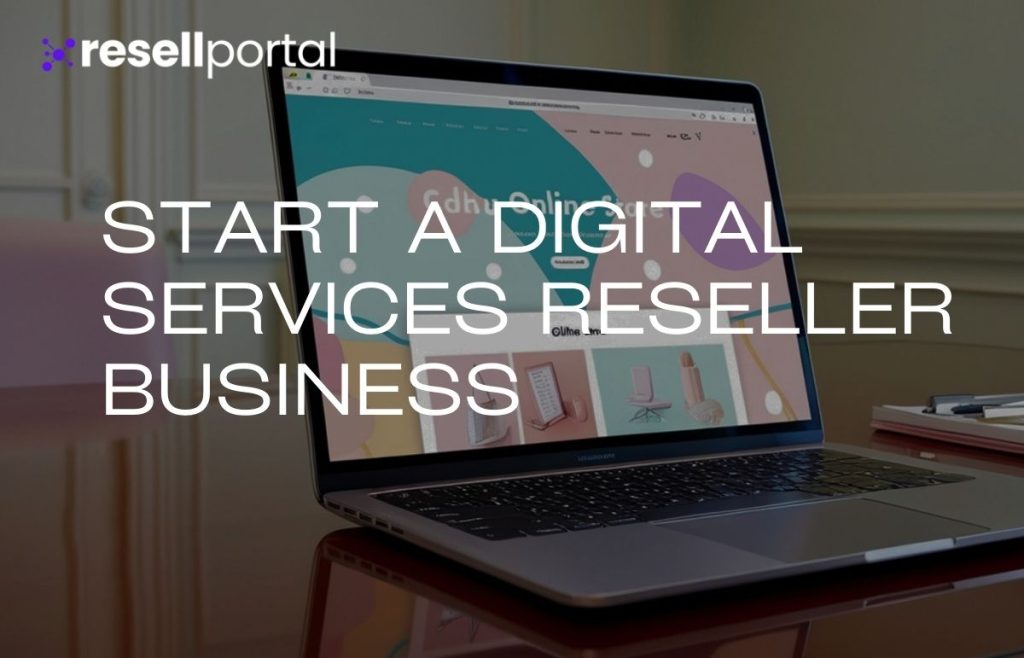
Step 2: Set Up Your Branded Storefront
A good reseller platform handles everything technical. Your job is branding:
Basic Setup (30 minutes)
- Upload your logo
- Set your brand colors
- Choose which products to offer
- Set your profit margin percentage
Domain Options
- Use a provided subdomain (yourname.resellerplatform.com)
- Connect your own custom domain (store.yourbrand.com)
Storefront Modes
Landing Page Mode – Activates when you sell one product. High-conversion layout focused on a single offer.
Catalog Mode – Activates when you sell multiple products. Clean grid layout showing your full service lineup.
No coding required. Drag and drop to reorder products. Toggle services on or off.
Step 3: Configure Client Communications
Everything your clients see should look like it comes from your company:
Email Branding
- Your logo in email headers
- Your company name
- Your brand colors on buttons
- Your support email for replies
- Your address in the footer
Client Portal Branding
- Clients log into a dashboard with your branding
- Manage their services, view invoices, get support
- Optional: Enable a support chat bubble that routes to your email
Advanced: Custom Domains for Products
Some platforms let you white-label individual products on your own domain. For example, if you resell an AI tools suite, your clients could access it at:
- ai.yourbrand.com (instead of the provider’s domain)
This level of customization makes your business indistinguishable from a “real” software company.
Step 4: Fund Your Wallet and Set Pricing
Reseller platforms typically use a wallet system:
- Deposit funds into your account
- When clients purchase, the wholesale cost deducts from your wallet
- You keep the markup as profit
Pricing Strategy Tips:
- 100% markup is standard (double wholesale)
- 150%+ markup works for premium positioning or specialized niches
- Lower markup can help in competitive markets or for client acquisition
You can adjust margins anytime. Start higher—you can always run promotions later.
→ Fund Your Account and Launch
Step 5: Get Your First Clients
Here’s where most guides get vague. Let’s be specific.
Warm Outreach (Fastest)
Who do you already know that needs these services?
- Friends running small businesses
- Former colleagues who went freelance
- Local business owners you’ve met
- Your existing clients (if you offer other services)
Send a simple message: “Hey, I just launched [service]. Thought of you because [reason]. Want me to set you up?”
Content Marketing (Long-term)
Create content answering questions your target clients search for:
- “Best VPN for remote teams”
- “How to choose a CRM for small business”
- “Website hosting for beginners”
Link to your storefront. Build organic traffic over time.
Freelance Platforms
If you offer web design, development, or marketing services on platforms like Upwork or Fiverr, upsell your reseller products:
- Built a website? Offer hosting.
- Set up a client’s business? Offer CRM.
- Helping with social media? Offer automation tools.
Local Business Outreach
Small businesses in your area need these services and often overpay for them. A local coffee shop, dentist office, or real estate agent could become a multi-product client.
Step 6: Scale With Systems
Once you have 10-20 clients, focus on efficiency:
Automate Onboarding
- Create template emails for new client setup
- Build a simple FAQ document
- Record a 5-minute welcome video
Track Key Metrics
- Monthly recurring revenue (MRR)
- Client churn rate
- Average revenue per client
- Operational runway (how long your wallet funding lasts)
Upsell Existing Clients
A client paying $12/month for VPN might also need:
- Web hosting (+$30/month)
- CRM system (+$30/month)
- Appointment booking (+$40/month)
One client can easily become $100+/month in recurring revenue.
→ Build Your Recurring Revenue Machine
Common Questions About Reseller Businesses
Do I need technical skills?
No. The platform handles provisioning, server management, app updates, and technical infrastructure. You handle sales and client relationships.
What happens if something breaks?
Backend support exists for technical issues. You’re the client-facing contact, but you’re not responsible for server uptime or software bugs.
How is this different from affiliate marketing?
Affiliates send traffic to someone else’s brand and earn a commission. Resellers sell under their own brand and control pricing. You own the client relationship.
Can I really compete with big companies?
Yes—because you’re not competing on infrastructure. You’re competing on service, relationships, and niche focus. A small business owner often prefers buying from a real person they can email rather than a faceless corporation.
What if I only want to sell one product?
That’s fine. Many successful resellers focus entirely on VPN or entirely on hosting. The platform adapts—single-product storefronts automatically use a high-conversion landing page layout.
Why Most People Never Start
The reseller model sounds too simple, so people assume there’s a catch.
There isn’t.
The catch is that most people won’t do the work of finding clients. They’ll set up a storefront, wait for traffic that never comes, and quit.
The resellers who succeed treat this like a real business:
- They reach out to potential clients
- They create content
- They follow up
- They ask for referrals
- They upsell existing customers
The platform gives you leverage. You still have to pull the lever.
What Happens After You Register
- Instant dashboard access – Explore the wholesale marketplace, see all available products and pricing
- Configure your storefront – Upload your logo, set colors, choose products, set your margin
- Add your first client – Either through your storefront or manually via the wholesale marketplace
- Watch the automation work – Client receives branded welcome email, gets access to their service, billing happens automatically
- Collect recurring revenue – Every month, quarter, or year, depending on what billing cycles you offer
Ready to Build Your Reseller Business?
You don’t need:
- Technical expertise
- A big budget
- Employees
- Custom software
You do need:
- A free reseller account
- A few hours to set up your storefront
- The willingness to find clients
Everything else is handled.
→ Create Your Free Reseller Account Now
Still Researching? Bookmark This.
If you’re not ready to start today, save this page. When you’re ready to build a recurring revenue business without the overhead of creating products yourself, you’ll know where to go.
But if you’ve read this far, you’re probably ready.